Technology
How Does Jack Dorsey’s Bitchat Messaging App Work Without Cell Towers or Internet?
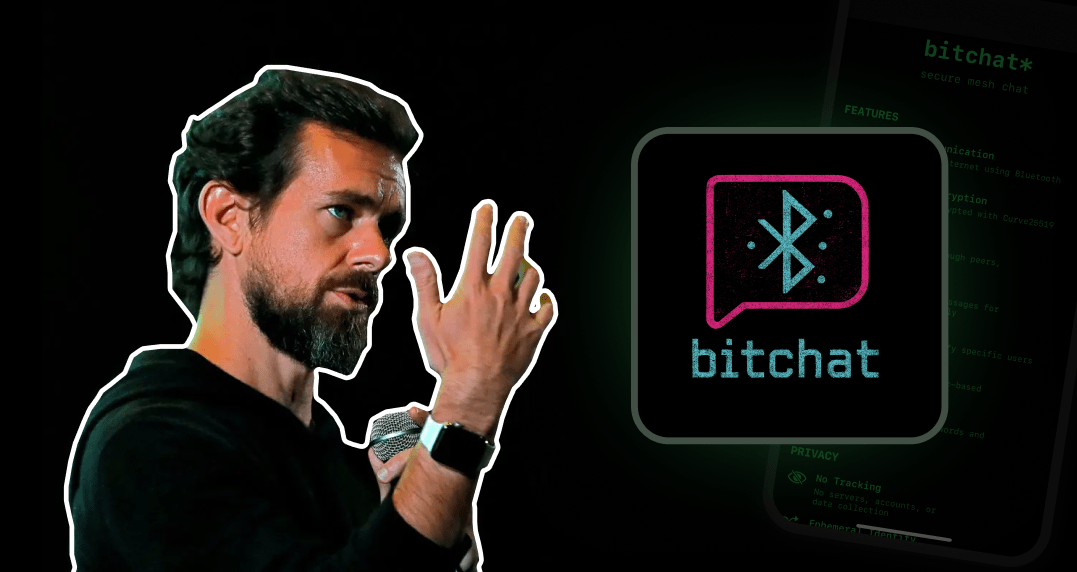
What if you could send messages without the internet or a SIM card?
No servers, no phone numbers, just peer-to-peer communication.
Yes, that’s exactly what BitChat is all about!!!
When Jack Dorsey, co‑founder of Twitter (now X) and CEO of Block, announced Bitchat, a messaging app that works entirely offline via Bluetooth mesh networking, the tech world took notice. Built over a weekend using Dorsey’s experimental AI coding assistant, Goose, Bitchat enables encrypted peer-to-peer messaging without internet, phone numbers, usernames, or servers. It’s an innovation aimed at enhancing privacy, censorship resistance, and connectivity in disconnected environments.
Who is Jack Dorsey?

Jack Dorsey is a name most people associate with Twitter, he co-founded the platform and served as its CEO during two separate stints. Dorsey also founded Block, Inc. (formerly Square), a fintech company that’s played a major role in reshaping digital payments and financial access.
Over the years, he’s become known for backing decentralized technologies and open-source protocols, often championing digital privacy and user autonomy. With Bitchat, Dorsey returns to those roots, this time applying his vision to how we communicate when traditional networks aren’t an option.
What is Bitchat?
Bitchat is a decentralized messaging application developed by Jack Dorsey and Block, Inc., launched in July 2025. It enables users to communicate without relying on Wi‑Fi, cellular service, or centralized servers. Instead, messages hop between nearby devices using Bluetooth Low Energy (BLE) mesh networks, making it particularly suited for areas with limited connectivity, protests, or emergencies.
How the Bluetooth Mesh Network Works?
- Mesh Networking via Bluetooth LE: Devices automatically connect to nearby phones to relay messages across the mesh. This allows messages to bridge gaps and extend reach beyond direct device range, around 300 meters or more.
- Encrypted, Peer-to-Peer Design: Bitchat incorporates end-to-end encryption using Curve25519 key exchange and AES‑GCM, ensuring message confidentiality with no intermediaries collected or stored centrally
- Anonymous Use: No account, phone number, email address, or user identification is required, ensuring total anonymity for participants.
Key Features & Encryption Protocols
Bitchat brings together smart technology and practical requirements. Designed to work in real-life situations when traditional messaging apps fall short, here are the features that make it possible.
- Offline & Infrastructure-Free: Operates without internet or cellular service, relying solely on Bluetooth mesh communication
- Password‑Protected Chat Rooms: Users can create group channels secured with passwords and encrypted with AES‑256‑GCM
- Private & Public Messaging: Supports both private messaging and IRC-like chat rooms for topic-based discussions
- Panic Mode: Triple‑tap the app icon to instantly erase all stored data in case of emergencies or device loss
- Extended Range: Mesh messaging currently reaches about 300 m
- Privacy Enhancements: Sends fake messages and randomizes timing to help protect user privacy.
Is Bitchat available for download?
Currently, Bitchat is in beta testing. Here are some insights that you might be interested in knowing:
- iOS beta invites were distributed via Apple TestFlight, but slots filled quickly, capped at 10,000 users.
- An Android version is under development, though no official release dates have been announced yet.
- The app has not cleared Apple’s App Store review process, citing further work needed for network optimization and protocol robustness.
Security Concerns Around BitChat
Although BitChat’s pitch is compelling, security researchers have raised several concerns since the app’s launch.
Lack of External Security Review: Shortly after launch, Dorsey updated Bitchat’s GitHub page with a prominent warning stating – “This software has not received external security review and may contain vulnerabilities… Do not rely on its security whatsoever until it has been reviewed.”
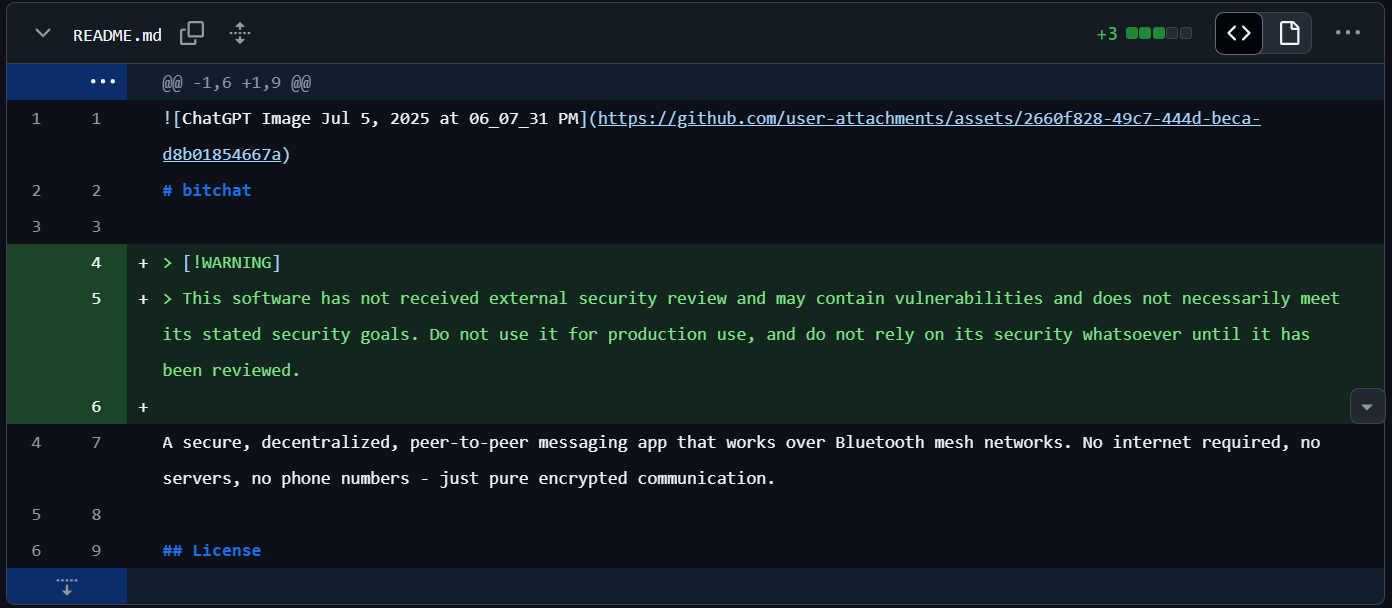
This caution was not visible when the app first debuted, sparking criticism for the delayed disclosure.
As of Wednesday, Dorsey also added a note: “Work in progress,” signalling that the app is still evolving and far from a production-ready state.
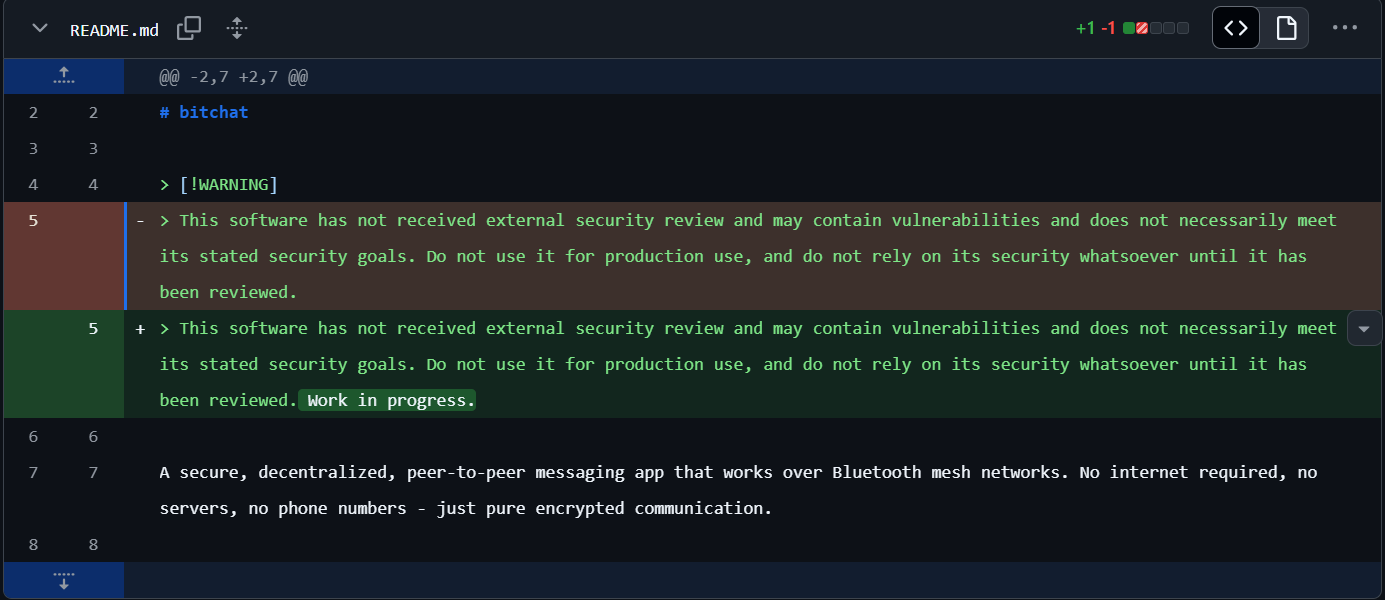
This addition came after growing scrutiny from the security community.
- Critical Flaw in Identity Verification: Security researcher Alex Radocea discovered a major issue, users can impersonate others by intercepting identity keys and tricking contacts into believing they’re speaking to someone they trust. This flaw undermines Bitchat’s “Favourites” system, a feature designed to indicate trusted users with a star icon.
- Forward Secrecy May Be Broken: Other researchers flagged that forward secrecy, which ensures past messages remain safe even if encryption keys are compromised, may not be functioning as claimed.
- Buffer Overflow Vulnerability: A user also reported a potential buffer overflow bug, a classic vulnerability that can be exploited to compromise a device’s memory, posing serious risks.
- Mixed Response on GitHub: Radocea initially filed a GitHub issue to report the flaw. Dorsey marked it as “completed” without comment, later reopening it and stating that security issues can be reported directly via GitHub.
“There are people out there that would take the messaging around security literally and could rely on it for their safety, so the project in its current state could endanger them.”
– Alex Radocea, Security Researcher
Conclusion
For those who think – Bitchat is just another messaging app, you’re mistaken!
Bitchat isn’t just another messaging app; it’s a reimagination of how to stay connected when traditional networks fail. Created by Twitter co-founder Jack Dorsey, the app uses encrypted Bluetooth mesh technology to enable communication without internet, SIM cards, or servers.
However, while the vision is promising, Bitchat is still experimental. The current beta version is unvetted, and independent security researchers have already exposed critical vulnerabilities. Dorsey himself advises users not to rely on it for secure communication, at least not yet.
For tech leaders and innovators, Bitchat offers a glimpse into the future of resilient, privacy-first communication tools, but also serves as a reminder that transparent audits and scrutiny must always back claims of security.