Technology
How Valve’s 2026 Steam Machine Is Redefining PC Gaming
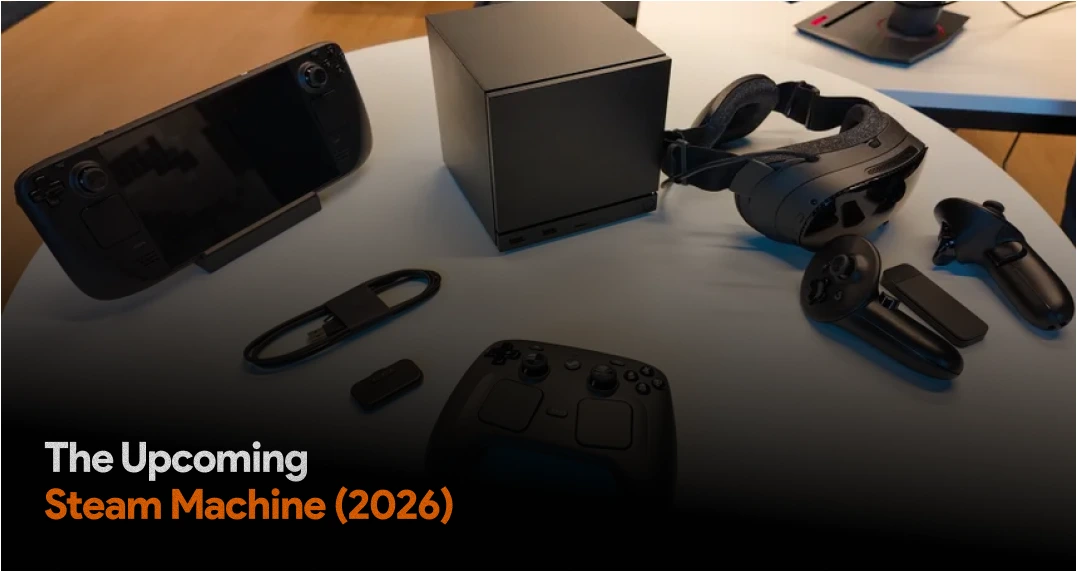
“It started with a handheld. Now Valve wants your living room”.
When Valve first launched the Steam Deck, it wasn’t just releasing another handheld; it was bringing the power of PC gaming into your palms.
Now, with the announcement of a next-gen Steam Machine console, Valve is pushing even further: not just portable play, but a desktop-grade Steam-powered machine built for the couch. Between its existing handheld legacy and ambitious new hardware, Valve is redefining what a “Steam console” can be.
What is Steam Deck?
The Steam Deck is Valve’s handheld gaming PC that lets you play your Steam games anywhere. It runs on a custom AMD chip powerful enough to handle big modern games, and it comes with 16 GB of memory plus storage options you can pick from — 64 GB, 256 GB, or 512 GB — with the option to add more using a microSD card. The device has a 7-inch touchscreen, comfortable controls, and two trackpads that make PC-style games easier to play on a handheld.
You can connect it to Wi-Fi, Bluetooth accessories, and even hook it up to a monitor or TV through its USB-C port. It has stereo speakers, a headphone jack, and a battery that lasts anywhere from a couple of hours to around eight, depending on what you’re playing.
The Steam Deck runs SteamOS, a Linux-based system that makes the device feel like a small, portable PC. You can install apps, browse the web, and even play many Windows games thanks to Valve’s Proton software. It’s built for flexibility—great for handheld play, but just as comfortable when connected to a TV or monitor. It delivers impressive performance for its size, though it’s not as powerful as a full gaming PC, and the battery life can still vary depending on what you play.
What’s New: The Upcoming Steam Machine (2026)
Valve has officially confirmed its next big hardware push, a new Steam Machine arriving in early 2026. Unlike the handheld Steam Deck, this device is built as a living-room console with full PC-grade performance. It’s designed to sit under the TV, deliver true 4K gaming, and slot directly into the Steam ecosystem.
Here are the complete specs and standout features:
| Category | Details |
| Hardware Powerhouse | CPU: AMD Zen 4 (custom), 6 cores / 12 threads, up to 4.8 GHz GPU: AMD RDNA 3 (custom), 28 compute units Memory: 16 GB DDR5 + 8 GB GDDR6 VRAM Storage: 512 GB or 2 TB NVMe SSD |
| Connectivity & I/O | Wireless: Wi-Fi 6E (tri-band), Bluetooth 5.3 Ports: DisplayPort 1.4 (4K 240 Hz / 8K 60 Hz), HDMI 2.0, USB-A, USB-C Ethernet: Gigabit Ethernet port included |
| Operating System | OS: SteamOS 3 (same as Steam Deck) Desktop Mode: KDE Plasma Library: Full native access to Steam games |
| Performance Targets | Claimed Power: 6× Steam Deck performance Gaming Goal: Smooth 4K gameplay Support: FSR upscaling, ray tracing (where supported) |
| Controller | Model: New Steam Controller (2026 edition) Features: Dual trackpads, haptics, improved ergonomics, precision-focused design |
| Why It Matters | For Gamers: PC-level performance in a compact console For Valve: Expands Steam ecosystem into TV/living room gaming Flexibility: Mods, software installations, multi-store support with console-like ease |
How is Valve’s new Console smarter than it looks?
This new console isn’t a one-off experiment. It’s a calculated step in Valve’s long-term vision for Steam hardware.
- Steam Library Leverage: Valve owns one of the largest game libraries (Steam). A dedicated console means more of that library gets played on purpose-built hardware.
- Differentiation: Unlike traditional consoles locked to fixed performance or PCs that require constant upgrades, Valve’s hardware can bridge both worlds.
- Long-Term Vision: Rather than refreshing hardware every year, Valve seems to be waiting for “real generational leaps” in silicon before launching major upgrades.
- Ecosystem Play: With both handheld (Steam Deck) and console (Steam Machine) options, Valve is covering multiple usage scenarios — portable gaming, couch gaming, and desktop.
What’s Next and What to Watch?
Valve hasn’t shared everything yet, but a few areas will shape how the new Steam Machine lands in the market:
- Release Window: The console is expected to arrive in early 2026.
- Pricing: Valve hasn’t disclosed pricing, and this will heavily influence adoption.
- Software Compatibility: How well third-party PC titles and non-Steam software work on SteamOS will be a major factor.
- Market Competition: If Valve gets the performance–price balance right, it could attract gamers who might otherwise pick a PS5, Xbox, or a custom PC.
The Big Picture
The Steam Deck showed Valve can make great hardware. The new Steam Machine takes that idea to the living room with far more power and a console-friendly design. If Valve delivers on the promise of high performance, seamless integration, and solid pricing, it could mark a major shift in how we think about console gaming.